
Categories
- DATA SCIENCE / AI
- AFIR / ERM / RISK
- ASTIN / NON-LIFE
- BANKING / FINANCE
- DIVERSITY & INCLUSION
- EDUCATION
- HEALTH
- IACA / CONSULTING
- LIFE
- PENSIONS
- PROFESSIONALISM
- THOUGHT LEADERSHIP
- MISC
ICA LIVE: Workshop "Diversity of Thought #14
Italian National Actuarial Congress 2023 - Plenary Session with Frank Schiller
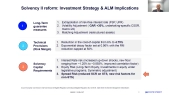
Italian National Actuarial Congress 2023 - Parallel Session on "Science in the Knowledge"
Italian National Actuarial Congress 2023 - Parallel Session with Lutz Wilhelmy, Daniela Martini and International Panelists
Italian National Actuarial Congress 2023 - Parallel Session with Kartina Thompson, Paola Scarabotto and International Panelists
185 views
0 comments
0 likes
2 favorites
 UlmUniversityifa
a { text-decoration: none; color: #464feb; } tr th, tr td { border: 1px solid #e6e6e6; } tr th { background-color: #f5f5f5; }
We develop a structural credit model of perpetual debt financing in which firms issue sustainability-linked bonds (SLBs) whose coupons step up via penalty payments when predefined sustainability targets are missed. Focusing on firms that aim to reduce emissions, we show that SLBs operate through two distinct channels: the firm can choose a lower endogenous bankruptcy threshold while holding equity value constant, or it can attain a significantly higher total firm value. In the first channel—when the bankruptcy threshold is set lower—SLBs reshape default incentives, extend expected firm lifetime, and can raise debt capacity without proportionally increasing distress costs. As a supplementary extension, we incorporate carbon taxes and subsidies to reflect policy-driven effects on cash flows and incentives, without changing the central mechanism through which SLBs affect default and leverage choices.




0 Comments
There are no comments yet. Add a comment.