
Categories
- DATA SCIENCE / AI
- AFIR / ERM / RISK
- ASTIN / NON-LIFE
- BANKING / FINANCE
- DIVERSITY & INCLUSION
- EDUCATION
- HEALTH
- IACA / CONSULTING
- LIFE
- PENSIONS
- PROFESSIONALISM
- THOUGHT LEADERSHIP
- MISC
ICA LIVE: Workshop "Diversity of Thought #14
Italian National Actuarial Congress 2023 - Plenary Session with Frank Schiller
Italian National Actuarial Congress 2023 - Parallel Session on "Science in the Knowledge"
Italian National Actuarial Congress 2023 - Parallel Session with Lutz Wilhelmy, Daniela Martini and International Panelists
Italian National Actuarial Congress 2023 - Parallel Session with Kartina Thompson, Paola Scarabotto and International Panelists
124 views
1 comments
0 likes
1 favorites
 AAE
AAE
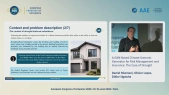
Insurance Guarantee Schemes (IGS) are increasingly central to European and global insurance policy discussions, particularly in the context of recovery and resolution frameworks. This presentation synthesizes recent analyses from EIOPA, the World Bank, IFIGS, and the European Commission, reviewing the key arguments for and against IGS, summarizing critical design choices, and highlighting open questions. The discussion also connects IGS to broader policy issues, such as the natural catastrophe (NatCat) protection gap.Evidence shows that IGS can play a vital role in safeguarding policyholders and maintaining confidence in the insurance sector, especially during insurer insolvency. Policymakers note that well-designed IGS contribute to financial stability and facilitate orderly resolution, with structures ranging from ex-ante (pre-funding) and ex-post (post-funding) to hybrid models. International experience underscores the importance of mandatory membership, clear coverage limits, and close coordination with supervisory authorities. Quantitative studies suggest that target fund sizes of 1–2% of gross written premiums are generally adequate, with risk-based contributions as a future objective. However, the diversity of insurance products and national frameworks across Europe complicates harmonization. Minimum harmonization—establishing common principles while allowing national flexibility—appears to be the most practical approach.Several unresolved issues remain. The necessity for IGS is less evident in markets with robust solvency regulation (e.g., Solvency II), where default risk is already low. The home/host country principle is contentious: home-country models may not sufficiently protect cross-border policyholders, while host-country approaches risk regulatory overlap and complexity. Pre-funding poses challenges for life insurance and pension products, where capital may be tied up for decades, and contagion risk—where the failure of a large insurer could destabilize the market—remains a concern in concentrated markets. It is essential to assess whether alternative solutions could address policyholder protection more effectively.Beyond prudential regulation, IGS can support the availability and reliability of NatCat insurance coverage. The most resilient systems combine dedicated NatCat pools, clear claims protocols, and strong public-private partnerships. Nonetheless, challenges persist regarding funding sufficiency, harmonization, and adaptation to increasingly severe climate risks. IGS should be tailored to the essential nature of the insurance products in scope, and in some cases, alternative structures may be more efficient.This presentation aims to share recent findings, stimulate discussion within the actuarial community, and address open questions regarding the diverse needs, optimal scope, and funding models for IGS.







1 Comments
August 6, 2026 11:10:32 AM UTC
Thanks, perhaps 30 minutes was a bit short to get sufficient detail.