
Categories
- DATA SCIENCE / AI
- AFIR / ERM / RISK
- ASTIN / NON-LIFE
- BANKING / FINANCE
- DIVERSITY & INCLUSION
- EDUCATION
- HEALTH
- IACA / CONSULTING
- LIFE
- PENSIONS
- PROFESSIONALISM
- THOUGHT LEADERSHIP
- MISC
ICA LIVE: Workshop "Diversity of Thought #14
Italian National Actuarial Congress 2023 - Plenary Session with Frank Schiller
Italian National Actuarial Congress 2023 - Parallel Session on "Science in the Knowledge"
Italian National Actuarial Congress 2023 - Parallel Session with Lutz Wilhelmy, Daniela Martini and International Panelists
Italian National Actuarial Congress 2023 - Parallel Session with Kartina Thompson, Paola Scarabotto and International Panelists
85 views
0 comments
0 likes
1 favorites
 AAE
AAE
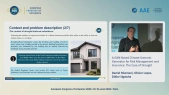
According to the 2025 report by France Assureurs on the cartography of emerging risks, climate-related hazards rank first in France in terms of both frequency and severity. Among these, drought emerges as one of the most critical risks, affecting not only France but also numerous regions worldwide. In fact, drought events have accounted for approximately 30% of the total indemnities paid under the French CatNat regime (Régime d’indemnisation des catastrophes naturelles). This paper introduces an artificial intelligence framework based on Conditional Generative Adversarial Networks (Conditional GANs) designed to generate future spatio-temporal trajectories of climatic indices. The focus is placed on the uniform Soil Wetness Index (SWI), a key indicator employed in France to quantify drought severity. The proposed model, referred to as SwiGAN, is developed to simulate plausible drought propagation patterns over time for a region in France particularly exposed to this hazard. By generating realistic sequences of SWI maps, SwiGAN provides new insights into the dynamics and propagation mechanisms of droughts under climate change scenarios. The resulting trajectories can inform the design of adaptive risk management and insurance strategies, contributing to enhanced resilience to climate extremes. Beyond its application to drought modeling, the proposed methodology offers a generalizable framework that can be extended to other climate-related perils or adapted for actuarial applications, such as economic scenario generation.








0 Comments
There are no comments yet. Add a comment.