
Categories
- DATA SCIENCE / AI
- AFIR / ERM / RISK
- ASTIN / NON-LIFE
- BANKING / FINANCE
- DIVERSITY & INCLUSION
- EDUCATION
- HEALTH
- IACA / CONSULTING
- LIFE
- PENSIONS
- PROFESSIONALISM
- THOUGHT LEADERSHIP
- MISC
ICA LIVE: Workshop "Diversity of Thought #14
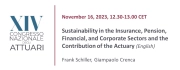
Italian National Actuarial Congress 2023 - Plenary Session with Frank Schiller
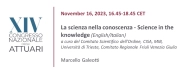
Italian National Actuarial Congress 2023 - Parallel Session on "Science in the Knowledge"
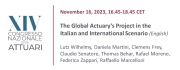
Italian National Actuarial Congress 2023 - Parallel Session with Lutz Wilhelmy, Daniela Martini and International Panelists
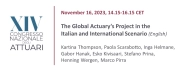
Italian National Actuarial Congress 2023 - Parallel Session with Kartina Thompson, Paola Scarabotto and International Panelists
67 views
0 comments
0 likes
0 favorites
 AAE
AAE
Context: Because of their medical history, cancer survivors in long-term remission often experience difficulties in accessing financial services. For the purpose of giving consumers who survived cancer equal access to credit-related insurance, a law called the “Right To Be Forgotten” was adopted in France in 2016, and a European directive was adopted in 2023 (Consumer Credit Directive 2023/2225). These provisions require that the insurance policies are not based on health data of cancer survivors after a relevant period of time following the end of cancer treatment. In France, since 2016, reference grids are published to adapt this period of time, based on changes in medical and epidemiological knowledge. However, these grids rely on survival data and not functional risks such as temporary and permanent disability. The CANAMIN project addressed this gap by assessing these risks, through an intersectoral collaboration combining actuarial science, epidemiology, and public health analytics. Methods: Using data from the French National Cancer Institute database, which are extracted from the French national health data system, we identified French women treated for incident breast cancer between 2011 and 2023. Temporary disability (receipt of sickness benefits) and permanent disability (receipt of permanent disability benefits) were identified from social insurance reimbursements. Sick leaves interrupted for less than 60 days were considered a single continuous episode. We reconstructed a cohort of 137,101 economically active women who had received sickness benefit during cancer treatment. Follow-up began at the end of active treatment (i.e., surgery, chemotherapy and/or radiotherapy) and continued until death, retirement, or the end of follow-up (2023). We used a multi-state framework to capture transitions between active employment, temporary disability, and permanent disability. Results: The median follow-up duration was 4.4 [interquartile range (IQR): 2.1 – 7.4] years, leading to a follow-up of 667,703 person-years. Median active treatment duration was 6.6 months [IQR: 3.3–8.8]. Treatment completion did not coincide with a return to work: at treatment completion, 115,184 women (84.0%) were still on sick leave, with a median remaining duration of 8.2 months [IQR: 2.6–16.0] from that point. After treatment, 69,316 women returned to work and experienced at least one new sick-leave episode; median time from the end of treatment to the first new episode was 21.7 months [IQR: 12.2–36.5], and median cumulative duration of new sick leave was 2.2 months [IQR: 0.6–7.0]. Permanent disability occurred in 16,934 women (12.4%) with a median onset time of 1.9 years after treatment completion [IQR: 1.3–2.4]. Nearly 89.3% of these disabilities were attributed to cancer, highlighting the persistence of sequelae beyond clinical remission. Conclusion: This framework enhances traditional life-table modelling by incorporating data on functional health and occupational status. By generating robust empirical data on transitions between states, it enables a more nuanced valuation of disability risk, helping to model the probability of entering and remaining in disability, and to update the policy concerning the Right To Be Forgotten. CoauthorsChristine Le Bihan (Institut national du cancer)Roberto Wolfrum, Vincent Roger, Samuel Cywie (Institut des actuaires)Clémence Ramier, Victoria Memoli, Anne-Déborah Bouhnik, Agnes Dumas (SESSTIM, INSERM, Aix Marseille Univ, IRD, ISSPAM)

0 Comments
There are no comments yet. Add a comment.