
Categories
- DATA SCIENCE / AI
- AFIR / ERM / RISK
- ASTIN / NON-LIFE
- BANKING / FINANCE
- DIVERSITY & INCLUSION
- EDUCATION
- HEALTH
- IACA / CONSULTING
- LIFE
- PENSIONS
- PROFESSIONALISM
- THOUGHT LEADERSHIP
- MISC
ICA LIVE: Workshop "Diversity of Thought #14
Italian National Actuarial Congress 2023 - Plenary Session with Frank Schiller
Italian National Actuarial Congress 2023 - Parallel Session on "Science in the Knowledge"
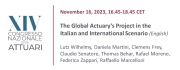
Italian National Actuarial Congress 2023 - Parallel Session with Lutz Wilhelmy, Daniela Martini and International Panelists
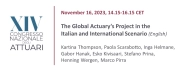
Italian National Actuarial Congress 2023 - Parallel Session with Kartina Thompson, Paola Scarabotto and International Panelists
152 views
0 comments
0 likes
0 favorites
 IAASections
There is mounting pressure on (re)insurers to quantify the impacts of climate change, particularly on the frequency and severity of claims from weather events like flooding. This is challenging, as it requires modeling at portfolio scale with enough spatial detail to capture local climate effects.In this webinar, we present a data science approach to assessing pluvial flood risk for insurance portfolios across Canada and the United States. The flood occurrence model quantifies financial impacts of short-term precipitation dynamics under current and future climate conditions using statistical methods, machine learning, and climate model data. It is designed for applications that do not require street-level precision, such as scenario or trend analyses.Our analyses show that climate change and urbanization will generally increase losses across Canada and the United States, though impacts vary across regions. Portfolio applications highlight the importance for (re)insurers of distinguishing between changes in hazard and exposure, as exposure may amplify or reduce the effects of climate change on losses. Read the paper here: DOI: https://doi.org/10.1017/asb.2024.19



0 Comments
There are no comments yet. Add a comment.